
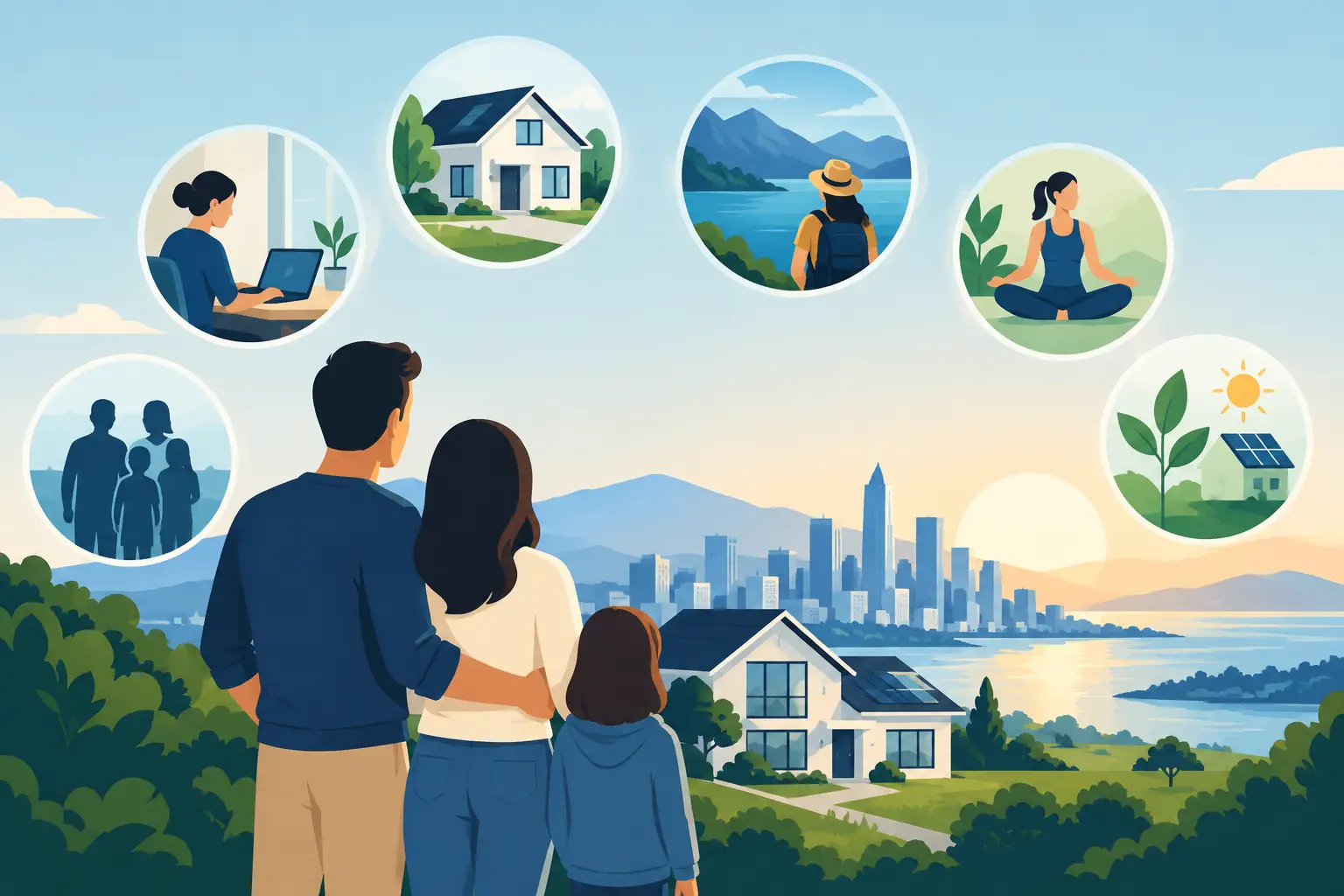
A promotion used to be the clearest sign that you were moving forward. A larger title, a better office, a home in a good neighborhood, and the confidence that steady work would keep opening doors. Those goals still matter. But the path to them is changing fast. The trends shaping the new American Dream are redefining what security, success, and upward mobility look like for American workers and entrepreneurs.
The new American Dream is not about abandoning hard work. It is about making hard work more valuable by pairing it with adaptability, ownership, technology, and a willingness to keep learning. Artificial intelligence sits at the center of this shift, not as a replacement for human ambition, but as a tool that can expand what one determined person is capable of building.
The Trends Shaping the New American Dream
1. Career security is becoming career adaptability
For generations, many people measured security by the length of time they stayed with one employer. That model is less dependable than it once was. Industries change, companies restructure, and technology alters job descriptions faster than traditional career ladders can respond.
The stronger form of security is the ability to create value in more than one setting. It means developing skills that travel with you: communication, judgment, sales, leadership, problem-solving, and the ability to use modern tools well. A person who can learn, explain, organize, and improve a process has options, even when a role changes.
This does not mean every worker must become a freelancer or leave a stable job. It means treating your career as an asset you manage. Keep building evidence of your value. Learn how your industry is changing. Become known as someone who can help a team move forward rather than someone waiting to be told what to do next.
2. AI literacy is becoming a practical advantage
AI is moving from a specialty topic to an everyday workplace skill. The advantage will not belong only to engineers or people who can explain the technical details behind a model. It will belong to people who know how to ask better questions, evaluate outputs, protect confidential information, and apply AI to useful work.
A project manager can use AI to organize meeting notes and identify risks. A small business owner can use it to draft customer communications, test marketing ideas, and reduce time spent on routine tasks. A job seeker can use it to practice interviews, sharpen a resume, and research a new field. The technology does not remove the need for human judgment. It raises the value of judgment because more people can produce a first draft quickly.
The trade-off is real. AI can create careless work when people accept answers without checking them. It can also widen the gap between people who build new capabilities and people who avoid the tools entirely. The practical response is not panic or blind trust. It is responsible use, steady practice, and an understanding of where human experience still matters most.
3. Ownership matters as much as income
A paycheck remains essential, but income alone is not the whole dream. More Americans are looking for ways to own a piece of what they create: a business, a side venture, intellectual property, investments, a professional reputation, or a body of work that generates future opportunities.
This shift is not a call to quit your job and chase every entrepreneurial trend. For some people, building ownership means starting a service business. For others, it means growing investments, creating a specialized consulting practice, or developing expertise that leads to better roles and greater negotiating power. The right path depends on your responsibilities, financial position, and appetite for risk.
What matters is the mindset. Ownership creates agency. It encourages people to ask, "What can I build that continues to create value after the immediate task is finished?" In an economy where change is constant, that question can lead to more freedom than relying on a single source of income.
4. Flexibility is being redefined as freedom with discipline
The dream of flexibility often brings images of remote work, self-directed schedules, and freedom from the traditional office. Those benefits are meaningful, especially for parents, caregivers, and people outside major job centers. Yet flexibility without direction can become instability.
The more useful goal is freedom with discipline. It is the ability to choose where possible, while still producing reliable results. Remote and hybrid work reward people who communicate clearly, manage their time, and make their contributions visible. Independent work rewards those same habits, along with financial planning and consistent client service.
Flexibility is not simply a workplace perk. It is a capability. The person who can work effectively across tools, teams, and locations is better positioned to shape their life around what matters to them. That might mean family time, a second business, education, or the chance to live somewhere that better fits their goals.
5. Continuous learning is replacing one-time preparation
A degree, certification, or early career accomplishment can open a door. It cannot guarantee that the door stays open forever. The pace of change means that education is becoming less like a phase of life and more like a lifelong habit.
This should be encouraging. You do not need to return to school for every shift in the economy. Often, progress begins with focused learning: understanding AI tools used in your field, strengthening financial literacy, improving public speaking, or gaining enough knowledge to move into an adjacent role. Small gains compound when they are tied to a clear objective.
The most valuable learners are not those who collect the most credentials. They are the people who apply what they learn. They test a new process, solve a customer problem, volunteer for a demanding project, or use a new skill to produce measurable results. Learning becomes powerful when it moves from information to action.
6. Personal reputation is becoming economic capital
In a crowded labor market, skill matters, but visibility matters too. Employers, clients, and collaborators want evidence that a person can be trusted to deliver. Your reputation is built through the quality of your work, the way you communicate, the problems you solve, and the consistency you show over time.
This does not require becoming an online personality. It can be as simple as documenting accomplishments, sharing useful ideas with your professional network, asking thoughtful questions, and following through on commitments. A strong reputation helps people find opportunities that are never posted publicly.
AI makes this trend more significant because it lowers the cost of creating content and presenting ideas. That gives more people a voice, but it also makes authenticity more valuable. The goal is not to sound polished at all costs. The goal is to be useful, credible, and clear about the value you bring.
7. Success is becoming more personal, not less ambitious
The older image of the American Dream was often narrowly defined: one career path, one kind of home, one visible measure of success. The new version is broader. It can include building a company, mastering a trade, changing careers at midlife, supporting a family, paying down debt, creating a meaningful body of work, or gaining control over your time.
That broader definition should not weaken ambition. It should make ambition more honest. Success is strongest when it aligns with your values rather than someone else’s scorecard. Financial progress still matters. So do responsibility, resilience, contribution, and the freedom to make choices for your future.
Turning Change Into Your Advantage
The new American Dream will favor people who see change clearly without surrendering to fear. AI will reshape jobs, but it will also create new ways to serve customers, start businesses, improve productivity, and turn knowledge into opportunity. The future will not reward passive optimism. It will reward prepared optimism.
Start where you are. Identify one part of your work that AI could help you improve. Build one skill that makes you more useful. Create one asset that you own. Strengthen one relationship with someone who can challenge your thinking and expand your view of what is possible.
That is how a changing economy becomes personal progress. The American Dream has always belonged to people willing to build, learn, and rise. Now, more than ever, it belongs to those willing to use the tools of the future with purpose.
