
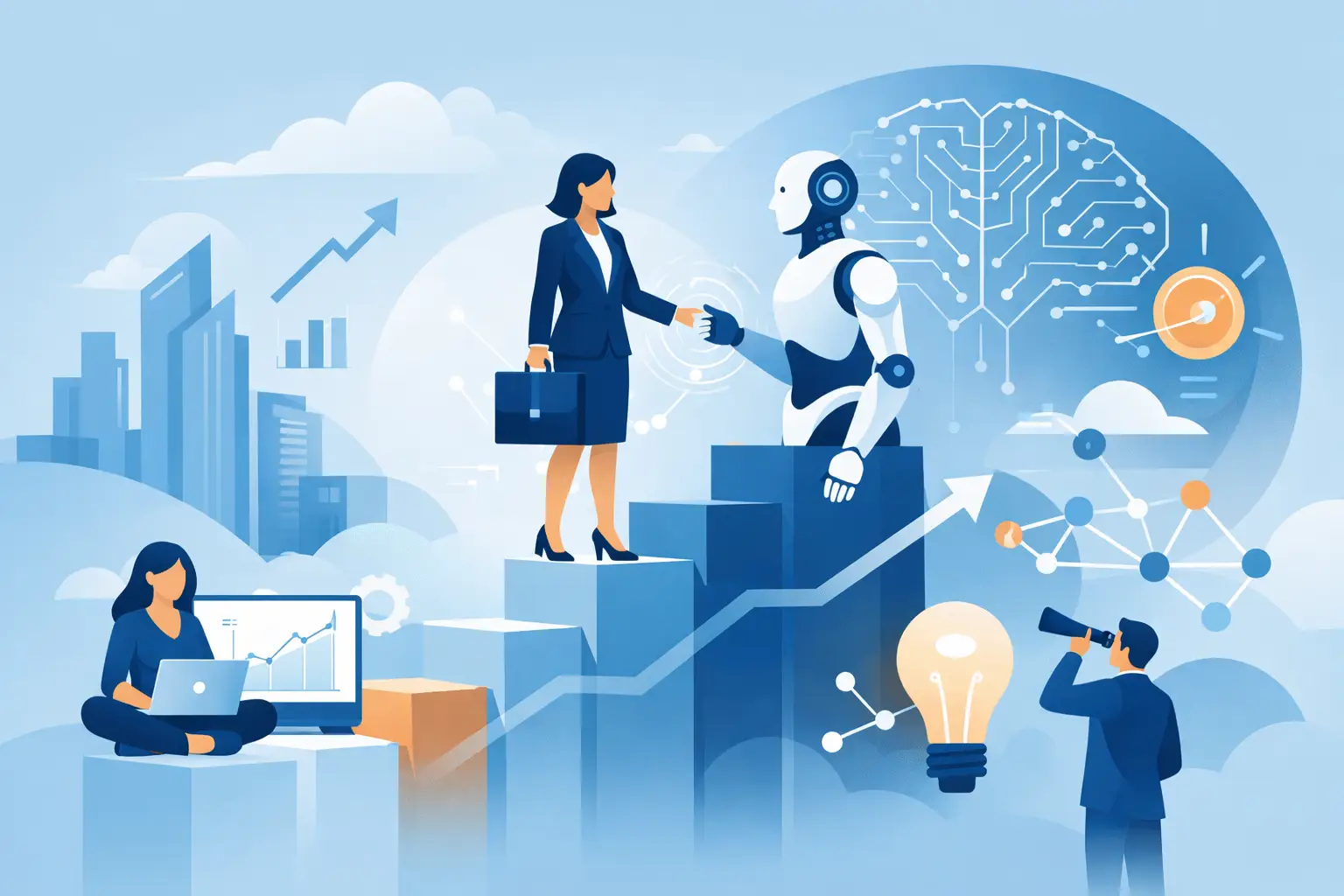
The job that feels secure because you have done it well for 10 years can change faster than most people expect. A new AI tool can reshape workflows, client expectations, hiring standards, and entire business models in a matter of months. This guide to building career resilience is not about panicking over that reality. It is about making yourself more valuable, more adaptable, and more capable of creating opportunity wherever the economy goes next.
Career resilience is the modern form of professional independence. It means you can respond to change without losing your direction, learn without waiting for permission, and turn disruption into a reason to grow. For Americans who believe in hard work and upward mobility, that is a powerful position to build.
What Career Resilience Really Means
Career resilience is not the promise that your role will never change. No employer, title, or industry can make that promise anymore. It is the confidence that you can continue contributing, earning, and advancing when conditions do change.
A resilient professional has more than one way to create value. They understand their industry, keep their skills current, build relationships, and know how to solve problems that matter to other people. They do not tie their entire identity to one software platform, one manager, or one job description.
AI makes this mindset more urgent, but it also makes it more achievable. The same technology that automates routine tasks can help a salesperson research prospects, help a small business owner create first drafts of marketing material, or help an operations professional identify patterns in messy data. The advantage will not go only to technical experts. It will go to people who learn to pair practical AI tools with sound judgment and a clear understanding of human needs.
Build Career Resilience Around Value, Not Tasks
Tasks are vulnerable because tasks can be standardized, delegated, or automated. Value is harder to replace. If your daily work consists mainly of gathering information, formatting documents, scheduling follow-ups, or producing predictable reports, AI may change how that work is done. That does not mean you are out of options. It means your next move is to become the person who interprets the information, improves the process, earns trust, and decides what should happen next.
Start by looking at your work with honest eyes. Which parts are repetitive? Which parts require context, accountability, persuasion, creativity, or a relationship? The first group may become faster with AI. The second group is where your professional leverage grows.
For example, a project coordinator can use AI to organize meeting notes and draft status updates. That saved time should not simply disappear into more busywork. It can be invested in identifying risks earlier, communicating more clearly with stakeholders, and helping teams make better decisions. The tool handles the first draft. The professional becomes more strategic.
This distinction matters because resisting every new tool is rarely a winning long-term strategy. Yet adopting every tool without thinking is not wise either. The goal is not to chase trends. The goal is to use technology in ways that improve your judgment, output, and ability to serve customers or colleagues.
Learn AI Through a Real Work Problem
Many people delay learning AI because they think they need to understand the technology at an expert level. You do not need to become a programmer to become more capable. Begin with a problem you already face each week.
If you work in customer service, test AI as a way to summarize recurring customer concerns. If you manage a team, use it to create a first outline for a training plan. If you are exploring a career change, use it to compare job descriptions, identify common skills, and prepare questions for informational conversations. Always review the output, protect confidential information, and apply your own judgment.
The point is to develop practical fluency. You want to be able to say, with credibility, “I know where AI can save time, where it can introduce errors, and how to use it responsibly.” That is a valuable capability in almost every field.
Strengthen the Skills AI Cannot Own
AI can generate language, analyze patterns, and process large amounts of information quickly. It cannot carry your reputation. It cannot take responsibility for a difficult decision. It cannot build trust with a customer who feels overlooked, or lead a team through uncertainty with courage and clarity.
The human skills that matter most are becoming more visible, not less. Communication, critical thinking, ethical judgment, leadership, negotiation, and emotional intelligence are no longer soft extras. They are career assets.
Improve your communication by practicing concise explanations of complex ideas. Improve your judgment by asking better questions before accepting an answer. Improve your leadership by becoming someone who brings steadiness when a team is uncertain. These strengths create differentiation because they are demonstrated over time, through real interactions and consistent follow-through.
There is a trade-off here. Technical skills may deliver faster short-term results, especially when a new platform is in high demand. Human skills compound more slowly, but they travel with you across industries, employers, and technologies. The strongest career strategy develops both.
Create a Personal Learning System
Career resilience does not come from one course, one certification, or one productive weekend. It comes from a repeatable learning habit. The people who stay competitive are not necessarily those who predict every shift correctly. They are the ones who can learn quickly after the shift arrives.
Set aside a small block of time each week to study the changes affecting your field. Read job descriptions for roles one level above your current position. Notice which tools and outcomes employers are asking for. Talk with people who do adjacent work. Then choose one skill to practice in a way that produces evidence.
Evidence matters. Instead of saying you are learning data analysis, build a simple report that answers a business question. Instead of saying you understand AI, document a process you improved with an AI-assisted workflow. Instead of saying you are interested in leadership, volunteer to coordinate a project with a clear outcome. Your portfolio does not need to be public or polished at first. It needs to prove to you, and eventually to others, that you can turn learning into results.
Build Relationships Before You Need Them
A resilient career is not built alone. Opportunities often arrive through people who know your work, trust your character, and understand where you want to go.
This does not require forced networking or collecting business cards. It means staying connected to former colleagues, mentors, clients, and peers with genuine interest. Ask what they are seeing in their industry. Share useful insights. Celebrate their progress. Be known as someone who follows through and contributes without immediately asking for something.
Relationships are especially valuable during career transitions because they give you information that a job posting cannot. A conversation can reveal what a company actually needs, which problems are growing, and whether a role has room for advancement. For entrepreneurs and small business owners, relationships also lead to referrals, partnerships, and a clearer view of customer demand.
Protect Your Financial and Professional Flexibility
Career resilience has a financial side. A person with no margin may feel forced to accept the first available option, even when it moves them away from their long-term goals. Building savings, reducing high-interest debt, and maintaining a realistic understanding of your monthly needs creates more room to make thoughtful decisions.
Professional flexibility matters as well. Keep your resume current. Track accomplishments while they are fresh. Maintain examples of work you are proud of. Know the skills that can transfer from your present role to another field. If you are employed, this preparation can make you a stronger internal candidate. If you are self-employed, it can help you adjust your offers as markets change.
You do not need to make a dramatic leap to gain flexibility. A side project, an industry credential, a small consulting engagement, or a stronger professional network can all expand your options. The right path depends on your responsibilities, risk tolerance, and financial position. Progress is still progress when it is measured and deliberate.
Treat Change as a Signal to Lead
The future of work will reward people who can see change clearly without surrendering to fear. AI will eliminate some tasks, reshape many roles, and create new paths that are difficult to see from where we stand now. Your response can be passive, or it can be purposeful.
Choose purposeful. Learn the tools that affect your work. Invest in the human strengths that make your contribution distinct. Build proof of your growth, relationships that widen your perspective, and enough flexibility to act when opportunity appears.
The American Dream has never been a guarantee of an easy road. It has been the belief that disciplined effort, practical learning, and personal initiative can create a better future. Let your career reflect that belief. Each new skill you build is more than protection against change. It is a vote for the future you intend to create.
