
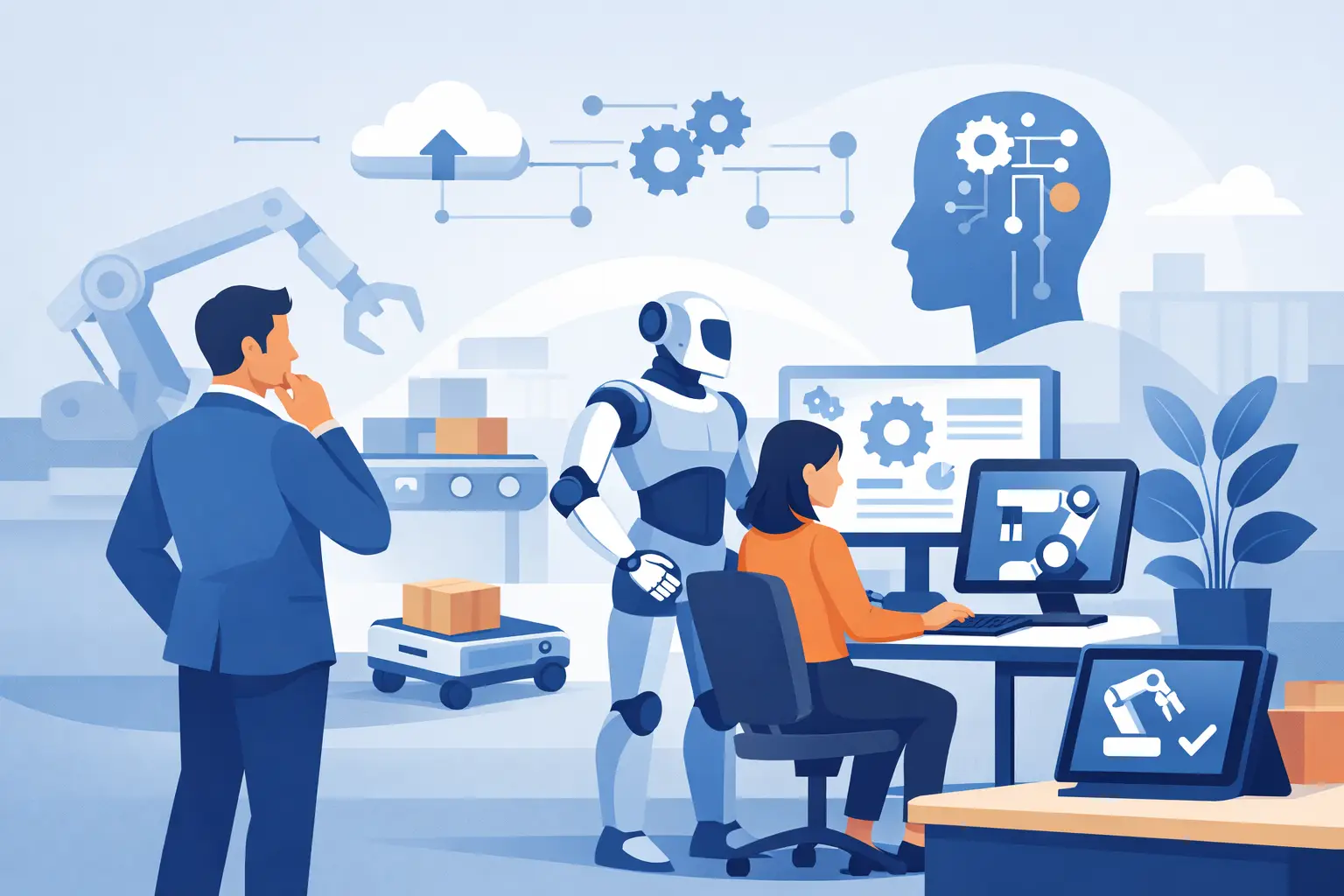
A new software tool can change the shape of a job before a company ever announces a reorganization. A report that once took two days may take two hours. Customer questions may be answered before a representative sees them. The people who benefit most are not necessarily the most technical people in the room. They are the people who know how to adapt to workplace automation without surrendering their ambition, judgment, or ownership of their future.
Automation is not a verdict on your value. It is a signal that the value of work is moving. For Americans who still believe hard work, initiative, and self-reliance can create a better life, that shift can be an opening rather than an ending. The goal is not to compete with machines at repetitive tasks. The goal is to become the person who uses new tools to solve bigger problems, serve people better, and create results others can trust.
How to Adapt to Workplace Automation by Changing Your Position
The most productive question is not, "Will AI take my job?" It is, "Which parts of my job are changing, and where can I become more valuable?" Automation usually affects tasks before it eliminates entire roles. Data entry, first drafts, scheduling, routine reporting, basic research, and standard customer responses are often easier to automate than relationship-building, decision-making, negotiation, leadership, and accountability.
Start by looking at your work honestly. Separate what you do into three categories: repeatable tasks, judgment-based tasks, and relationship-based tasks. Repeatable work is where automation may save time. Judgment-based work requires context, priorities, ethics, and the ability to recognize when the obvious answer is wrong. Relationship-based work depends on trust, communication, and the human ability to make another person feel understood.
This exercise is not about protecting every task on your calendar. It is about protecting and expanding your contribution. If a tool can produce a first draft of a proposal, your role can become improving the strategy, checking the facts, understanding the client, and presenting an idea with conviction. That is not less valuable work. It is higher-value work.
Learn the Tools, but Do Not Stop at the Tools
Many workers make one of two mistakes. Some avoid AI tools because they feel intimidated or suspicious. Others learn a few prompts, generate quick output, and assume they are prepared. Neither approach is enough.
Practical AI literacy means understanding what a tool can do, where it can make mistakes, and how to apply it responsibly in your field. You do not need to become a machine learning engineer to gain an advantage. A sales professional can use AI to organize account research and prepare better questions. A project manager can use it to identify risks and summarize updates. A small business owner can use it to outline marketing ideas, improve internal processes, and reduce time spent on administrative work.
The advantage comes from pairing the tool with real expertise. AI can offer possibilities quickly, but it does not carry your reputation when an answer is inaccurate, insensitive, or poorly timed. Human review is not an old-fashioned extra step. It is the standard that separates useful work from careless work.
Choose one task that consumes time every week and test an approved automation or AI tool against it. Measure the result. Did it save time? Did quality improve? What still required your knowledge? Keep the process if it creates a real gain. Reject it if it creates more cleanup, introduces risk, or weakens the customer experience. Progress is not about using technology for its own sake. It is about producing better outcomes.
Build Skills That Gain Value as Routine Work Shrinks
When routine tasks become cheaper and faster, employers and customers place a premium on capabilities that are harder to copy. This is where career resilience becomes career growth.
Communication rises in value because people still need someone who can explain complex ideas clearly, lead a difficult conversation, and persuade a group to act. Critical thinking rises in value because automated output still requires someone to assess evidence, spot flawed assumptions, and choose among competing options. Industry knowledge rises in value because generic answers rarely solve specific business problems.
Leadership matters even if you do not manage a team. Leadership is the habit of seeing what needs to happen next, taking responsibility for a result, and helping others move forward. In an automated workplace, the person who can define a problem and coordinate people around a solution becomes more valuable than the person who waits to be assigned the next task.
There is a trade-off worth acknowledging. Broad skills such as communication and judgment matter, but they become more powerful when attached to a specific domain. A vague claim that you are "good with AI" will not carry much weight. Being the healthcare operations coordinator who can improve patient communications with AI while protecting privacy is different. Being the contractor who can use automation to deliver faster estimates without losing the personal service that earns referrals is different.
Build a reputation at the intersection of a real field and a useful new capability. That intersection is where opportunity tends to grow.
Become the Person Who Improves the System
Fear makes people hide from change. Opportunity favors people who help shape it.
If your workplace is adopting new technology, pay attention to the friction points. Where are employees confused? Which process creates errors? What questions keep returning? These are chances to contribute. You may not control the organization’s technology budget, but you can become a practical voice in how tools are used.
Bring leaders solutions, not just concerns. If an automated workflow produces inaccurate customer emails, document examples and suggest a review process. If a new reporting tool saves time, show the team how to use those saved hours for better analysis or customer follow-up. This is how you turn automation from something being done to you into a change you help lead.
That posture also builds trust. Companies need people who can translate between technology and daily operations. They need employees who can explain what is working, what is not, and what responsible use looks like. This translator role is available in nearly every industry, from manufacturing and logistics to education, real estate, finance, and local service businesses.
Create a 90-Day Automation Advantage Plan
Confidence grows from action, not from reading alarming headlines. Over the next 90 days, give yourself a focused assignment:
- Identify two recurring tasks that consume time but do not require your full judgment.
- Test one approved AI or automation tool on a low-risk version of each task.
- Spend weekly learning time on one skill that strengthens your judgment, communication, sales ability, or industry expertise.
- Document a measurable improvement, such as time saved, fewer errors, faster response times, or stronger client feedback.
The documentation matters. Career growth is easier when you can show evidence. Instead of saying you are adaptable, you can explain that you redesigned a process, saved five hours a week, improved follow-up, and created a quality-control step that protected customers. Those are the stories that strengthen a resume, a promotion conversation, a job interview, or a business pitch.
If your employer offers training, use it. If it does not, take responsibility for your own education. Read, practice, ask thoughtful questions, and build small projects that prove what you can do. The future will reward people who treat learning as a permanent advantage rather than a temporary requirement.
Protect What Automation Cannot Replace
Technology can accelerate work, but it cannot replace character. A system can recommend an answer, yet it cannot take personal responsibility for a promise. It can generate language, yet it cannot fully understand the stakes of a family’s financial decision, a patient’s concern, a customer’s frustration, or a team’s morale.
Your integrity, reliability, curiosity, and willingness to serve remain economic strengths. In fact, as more content and communication become automated, genuine trust may become even more valuable. People remember who followed through, who told the truth when a mistake occurred, and who made a complicated situation easier to understand.
That is why adapting to automation is not only a technical project. It is a personal development project. Use technology to remove busywork, but invest the time you gain in becoming more capable, more informed, and more useful to other people.
The American Dream has never been a promise that the economy will stand still. It is the belief that determined people can learn, build, and rise when conditions change. Automation will reshape the work ahead. Let it also sharpen your direction. The next opportunity may begin with the decision to become more than a worker who completes tasks and instead become someone who creates value wherever the future goes.
