
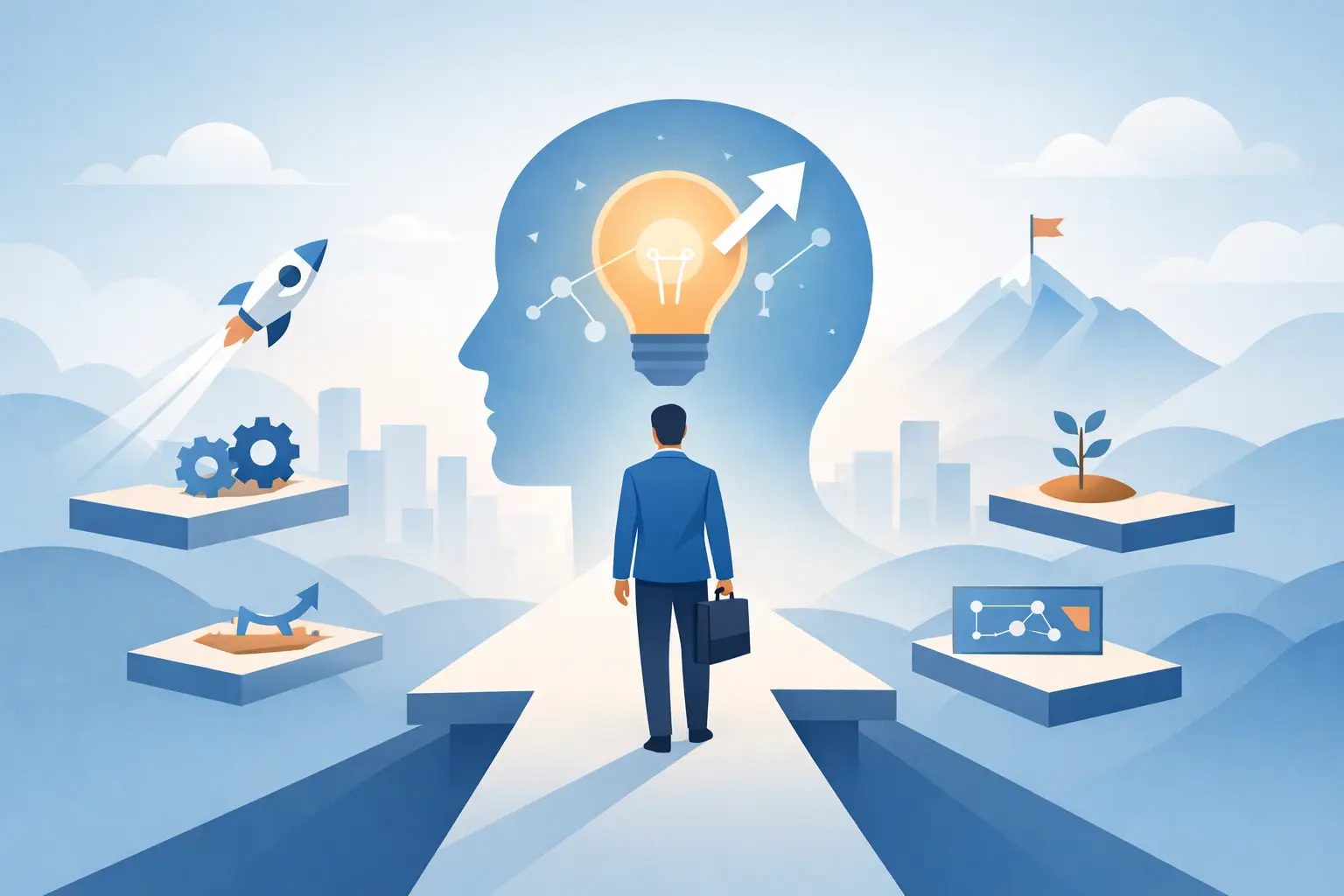
The most valuable asset you bring to work is no longer only what you know. It is how quickly you can learn, adapt, and apply new tools to solve real problems. That is why learning how to build a future ready mindset matters now. Artificial intelligence is changing the shape of opportunity, but it does not erase the need for human ambition. It raises the value of people who can think clearly, act responsibly, and keep moving when the rules change.
For many Americans, the pressure is real. A job that once felt secure may be evolving. A small business may be competing with larger, faster companies. A professional may wonder whether AI will make years of experience less valuable. The better question is not, “Will change affect me?” It already has. The question is whether you will meet that change as a spectator or as a builder.
A future ready mindset starts with ownership
A future ready mindset is not blind optimism. It is the decision to take responsibility for your next move, even when the economy, your industry, or technology feels uncertain. It means refusing to hand over your confidence to a headline, a company reorganization, or a new software release.
Ownership begins with a simple shift: your career is not a job title. It is a portfolio of skills, judgment, relationships, reputation, and results. Your employer may change. Your industry may change. The tools you use will certainly change. But the ability to create value can travel with you.
This perspective is especially powerful for workers who were taught that hard work alone guarantees security. Hard work still matters. So do consistency, integrity, and persistence. But future opportunity also requires strategic learning. The person who works hard while learning what the market now values is in a far stronger position than the person who only protects the old way of doing things.
Replace fear of AI with useful curiosity
Fear is understandable when technology moves quickly. AI can automate routine tasks, accelerate research, generate drafts, analyze data, and change how teams make decisions. Some roles will shrink, and some career paths will require serious reinvention. Pretending otherwise does not serve anyone.
Yet fear becomes costly when it stops you from learning. You do not need to become a computer scientist to benefit from AI. You need enough understanding to recognize where it can help you work better, serve customers more effectively, or test an idea faster.
Start with the tasks that consume time but do not require your highest judgment. A sales professional might use AI to organize call notes and prepare follow-up ideas. A manager might use it to outline training materials. A small business owner might use it to brainstorm customer questions, refine a marketing message, or compare operational options. Then bring your own experience to the result. AI can produce a starting point. Human judgment determines whether it is accurate, useful, ethical, and right for the situation.
The trade-off matters. Using AI without checking its work can create mistakes, expose sensitive information, or weaken trust. Refusing to use it at all can leave you slower than competitors. The stronger path is informed participation: learn the tool, protect what matters, and stay accountable for the final outcome.
Practice before the pressure arrives
Do not wait until your company announces a new AI system or your industry faces a disruption. Build confidence through low-risk practice. Pick one recurring task each week and ask whether a digital tool could help you do it faster, more clearly, or with better preparation.
Keep a short record of what worked, what did not, and what you learned. This creates proof that you are not just interested in the future. You are preparing for it. Over time, those small experiments become practical skill, and practical skill becomes career leverage.
Build skills that technology strengthens, not replaces
The future belongs to people who combine technical fluency with distinctly human capabilities. AI can process enormous amounts of information. It cannot fully replace trusted relationships, personal accountability, ethical leadership, local market insight, or the ability to persuade a room of people with different concerns.
Focus on skills that make you more valuable alongside technology. Clear communication helps you explain complex ideas in plain language. Critical thinking helps you question weak assumptions and verify information. Problem-solving helps you identify what actually needs to be fixed. Emotional intelligence helps you lead through uncertainty instead of adding to it.
There is no single skill list that fits every career. A nurse, an electrician, a financial analyst, and a restaurant owner will use technology differently. What they share is the need to understand their customers, make sound decisions, and keep learning as their tools improve.
Ask yourself three practical questions: What problems do people trust me to solve? Which parts of those problems could technology help me handle better? What skill would make me more useful six months from now? Your answers point toward a learning plan that is personal, realistic, and connected to opportunity.
Learn in public through results
A future ready person does not wait for permission to become more capable. They create evidence. That evidence might be a process you improved, a customer experience you strengthened, a project you completed, or a new service you tested.
For professionals, this can mean volunteering to pilot a new workflow, sharing a useful lesson with your team, or documenting a measurable improvement. For entrepreneurs, it can mean testing an offer with a small audience before investing heavily. For career changers, it can mean building a project that demonstrates ability before applying for the next role.
Results matter because the future of work is increasingly skills-based. Credentials can open doors, but demonstrated value keeps them open. A portfolio does not have to be formal or flashy. It simply needs to show that you can identify a problem, use available resources, and follow through.
This is also where confidence becomes earned. Motivation is helpful, but it fades when it is not supported by action. Every completed experiment tells you that you can respond to change instead of being defined by it.
Protect your attention and your character
Technology creates access to more information than any generation has had before. It also creates more distraction, more comparison, and more noise. A future ready mindset requires discipline about what receives your attention.
Set aside regular time to learn without constantly switching between alerts. Choose a few credible subjects that matter to your goals: AI tools in your field, leadership, financial literacy, customer behavior, or an emerging business opportunity. Then apply what you learn. Consuming information without action can feel productive while changing very little.
Character matters just as much. As new tools make work faster, trust becomes more valuable. Be the person who gives credit, checks facts, protects confidential information, and does not present machine-generated work as expertise you do not possess. Your reputation is an economic asset. In a fast-moving environment, people remember who was reliable when it counted.
How to build a future ready mindset through a 90-day reset
Big change becomes manageable when it has a time frame. Over the next 90 days, choose one area of your work or business where AI or another emerging tool could create a meaningful improvement. Define the problem before choosing the tool. For example, reduce time spent on weekly reporting, improve the quality of client follow-up, or research a new market more efficiently.
Spend the first month learning and testing. Spend the second month applying the tool to a real task. Spend the third month measuring the result and deciding what to keep, improve, or stop. This approach prevents two common mistakes: chasing every new trend and avoiding change until it becomes unavoidable.
Share what you learn with someone you trust. A colleague, mentor, business partner, or family member can help you see blind spots and stay committed. The American Dream has always included self-reliance, but self-reliance does not mean going alone. Strong networks expand what you can see and what you can build.
The future will reward people who remain teachable without becoming timid, ambitious without becoming reckless, and optimistic without ignoring reality. You do not need every answer before you begin. You need the willingness to take the next useful step, learn from it, and keep building a life that technology can strengthen rather than shrink.
